
Implications of the failure of the global plastics treaty on climate change?
The 5th Intergovernmental Negotiating Committee (INC-5) on Plastic Pollution recently concluded in Busan, South Korea, without reaching a consensus. Despite week-long discussions involving representatives from 170 countries, no agreement was made on limiting plastic pollution—one of the most urgent global challenges. This series of meetings, launched by the UN in 2022, aimed to craft a legally binding treaty to end plastic pollution by 2024. Previous sessions took place in Uruguay, France, Kenya, and Canada, culminating in Busan. However, key nations, including India, expressed reluctance to regulate plastic production, citing developmental priorities. The stakes are high: plastics are fossil fuel-based, and their production generates significant greenhouse gas emissions, exacerbating global warming. Without a treaty, controlling this sector’s contribution to the climate crisis seems unlikely. At end-of-life, plastics in landfills or through open burning release harmful emissions like methane, further accelerating climate change. India’s towering landfills, such as Delhi’s Ghazipur site, serve as daily reminders of the issue, with noticeable air pollution impacts on surrounding communities. Plastics also hinder natural carbon sinks, such as oceans and forests, and disproportionately affect vulnerable populations with limited waste management facilities. This deadlock not only delays the transition from fossil fuels but also worsens the planet’s climate trajectory. Extreme Weather Update Meanwhile, Storm Bora wreaked havoc in Greece, causing flash floods and widespread destruction. Events like these highlight the Mediterranean region’s vulnerability to stronger storms driven by rising sea temperatures. A Glimmer of Hope On a brighter note, the LA Rams’ “Football Without a Footprint” initiative aims to offset carbon emissions through local carbon credits and community outreach, promoting climate action within the sports industry. As 2024 shapes up to be the hottest year on record, with global temperatures surpassing 1.5°C, the urgency for climate action has never been greater. Thank you for watching this episode of Tipping Point. Subscribe to The Hindu for more insightful climate coverage.
| Video Credit:
The Hindu
The fifth Intergovernmental Negotiating Committee (INC-5) on Plastic Pollution recently concluded in Busan, South Korea, without reaching a consensus. Despite week-long discussions involving representatives from 170 countries, no agreement was made on limiting plastic pollution—one of the most urgent global challenges.
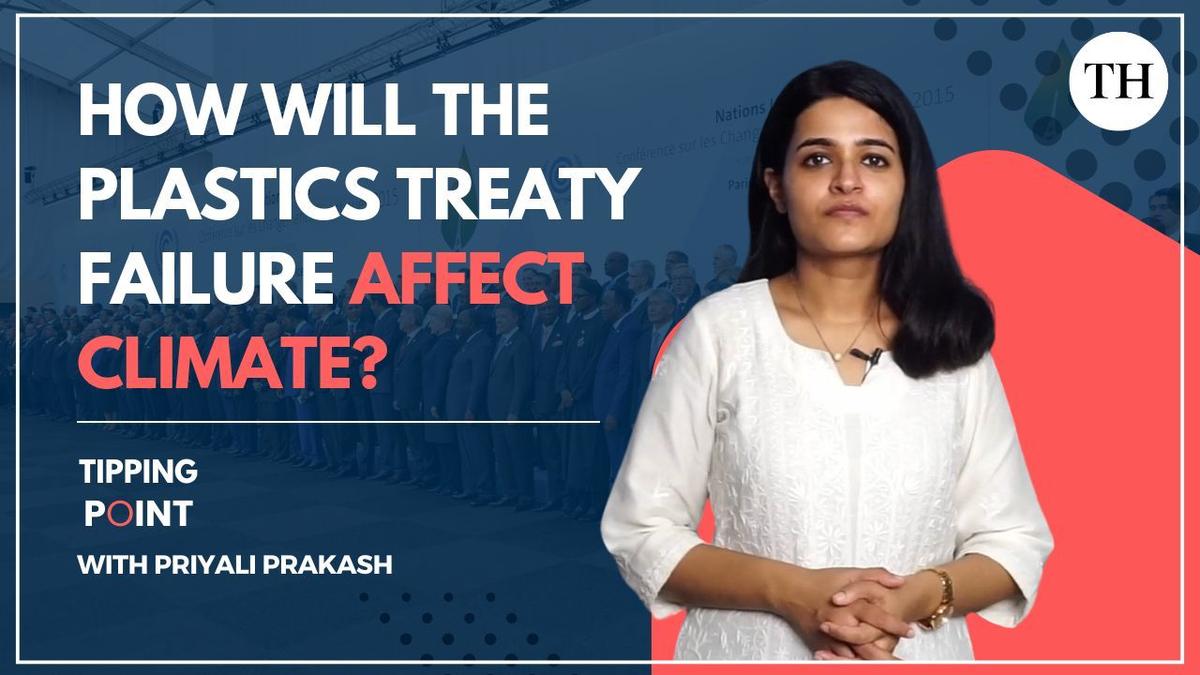
This series of meetings, launched by the UN in 2022, aimed to craft a legally binding treaty to end plastic pollution by 2024. Previous sessions took place in Uruguay, France, Kenya, and Canada, culminating in Busan. However, key nations, including India, expressed reluctance to regulate plastic production, citing developmental priorities.
The stakes are high: plastics are fossil fuel-based, and their production generates significant greenhouse gas emissions, exacerbating global warming. Without a treaty, controlling this sector’s contribution to the climate crisis seems unlikely.
At end-of-life, plastics in landfills or through open burning release harmful emissions like methane, further accelerating climate change. India’s towering landfills, such as Delhi’s Ghazipur site, serve as daily reminders of the issue, with noticeable air pollution impacts on surrounding communities.
Plastics also hinder natural carbon sinks, such as oceans and forests, and disproportionately affect vulnerable populations with limited waste management facilities. This deadlock not only delays the transition from fossil fuels but also worsens the planet’s climate trajectory.
Credits:
Script & presentation: Priyali Prakash
Video & editing: Zeeshan Akhtar
Published – December 12, 2024 08:18 pm IST


