It is not easy being a child today. Living in a world where the online co-exists and, at times, overtakes, the offline, a young person is more vulnerable than ever and tends to seek the temporary highs offered by drugs, drink or gambling.
“Most students want to become influencers of some sort. Teachers have told us that, at times, students make ‘reels’ (on their phones) with fake weapons. Concepts we theorise about like toxic masculinity are already in their minds. Children are unable to find the time to speak to anyone about their problems, especially at home. They need a space where they can share their thoughts without being judged,” says Samarth Pathak, communications head, (South Asia) and regional focal point (Youth and Education) at the United Nations Office on Drugs and Crime (UNODC).
Based out of Delhi, the South Asia regional centre of UNODC has been working in India since 2016 under the framework of the Sustainable Development Goals (SDG) 16, which promotes peace, justice and strong institutions.
Outside the curriculum
The agency’s RiseUp4Peace initiative, conducted in collaboration with Kamla Nehru Public School (KNPS) in Chak Hakim village, Phagwara, Punjab, has educator partners across India and abroad and aims to create a safe space for children and educators to get sensitised about problematic issues that do not figure on the curricula of most institutions. KNPS caters to children from 65 villages, most being first-generation learners. Raising awareness about drug abuse is a key issue that the institution has been tackling head-on. “Drugs are a big problem in Punjab, and the problem is often swept under the carpet. However, we are very vocal about it and are teaching them the harmful effects of drug abuse,” says Paramjeet Kaur Dhillon, principal of Administration and Innovation. Under the auspices of RiseUp4Peace, (and with the prior consent of parents), the school conducts an awareness campaign that is quite graphic, says Dhillon.
“Initially, we roped in the policy-makers. Police officials from Phagwara were included in the first meetings. I prepared a detailed presentation on the scale and nitty-gritty of drug abuse, and then we added videos. Giving a talk is one thing, but showing children the impact of drugs, and related social problems through videos can give them a jolt, and discourage them from experimenting.” RiseUp4Peace has developed a range of free educational material that is peer-reviewed and the content is shared as videos, cartoons, comics and activity handbooks.
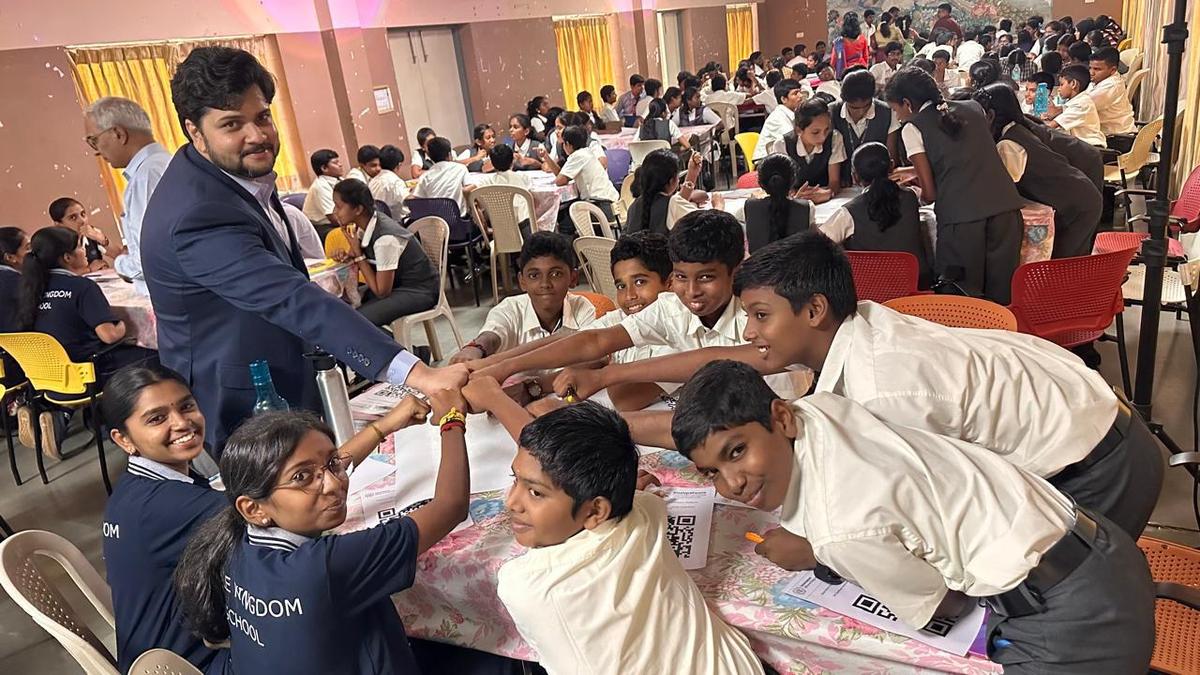
One particular challenge, says Samarth, is to figure out vicissitudes of social issues. “When you want to work on drugs, for instance, you have to connect it to mental health and anxieties. With so much problematic content available to children today, words like justice, peace, harmony, truth, rule of law and integrity do not have a place in their lives. Once the child knows the difference between right and wrong, or is provoked to think about these causes, it becomes important.”
This year, meetings were conducted for educators in seven states (Punjab, Kerala, Chhattisgarh, Tamil Nadu, Uttar Pradesh, Meghalaya, and Assam), with several more in the pipeline. Nearly 1,200 educators, educational leaders, and 21,000 students and young people from rural, vulnerable, and urban settings were part of RiseUp4Peace’s activities. Over 120 virtual and in-person dialogues have been organised.
Talking about inclusivity
In addition, youth advocates Aarushi Gambhir and her friend Alviya Haider, who are persons with disability, have been sensitising educators and students about inclusive classrooms and disability rights, using their own life experiences. Aarushi founded Enable Education, a project targeted at creating awareness about the needs of students with disabilities in schools and colleges, as part of Volunteer for India’s Volship Fellowship. She currently leads a team of 30 people in the project, with the support of UNODC’s RiseUp4Peace Initiative. “Working for RiseUP4Peace has enabled me to reach out to more educators and foster dialogues amongst the students,” she says. “Education is endless. But learning the fundamental values of human life is important too. When students acknowledge these issues, they can come up with ideas to combat them.”
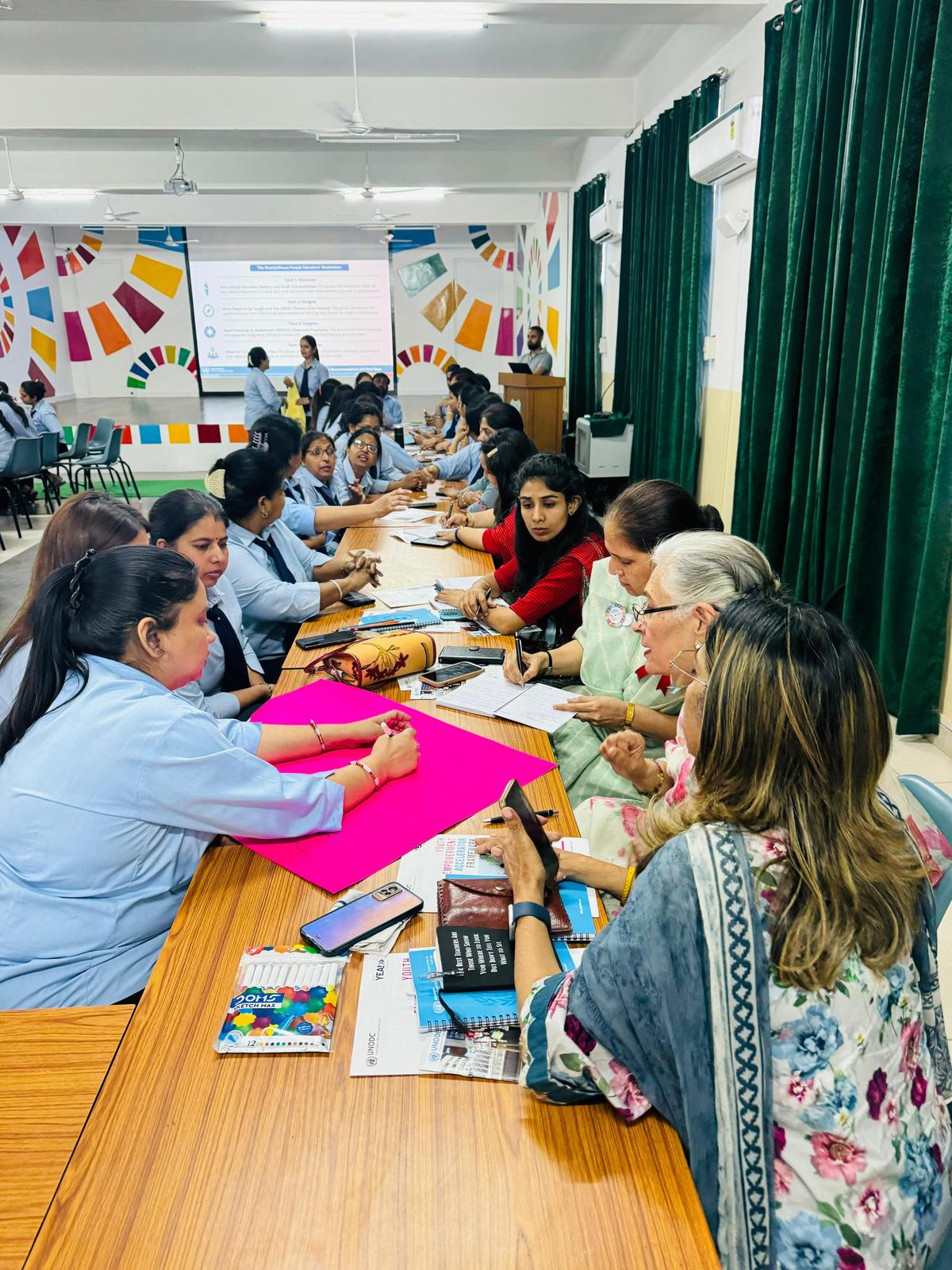
Since these are not traditional subjects, there’s a way in which they are to be taught, says Samarth. “There is a very fine line between talking about social issues and moral preaching. The moment students feel that they are being preached to, they immediately put up a wall. It requires a specialised cadre of teachers who can make students open up. We also have a vibrant online community of volunteers that meets regularly to share ideas,” he says.
Marco Teixeira, UNODC regional representative for South Asia, adds, “Through the RiseUp4Peace initiative, we are empowering educators and students to be catalysts for positive change by fostering values of integrity, peace, and the rule of law within classrooms. It stands to support the transformative power of education in shaping a just and inclusive society.”
Published – October 26, 2024 03:00 pm IST


