
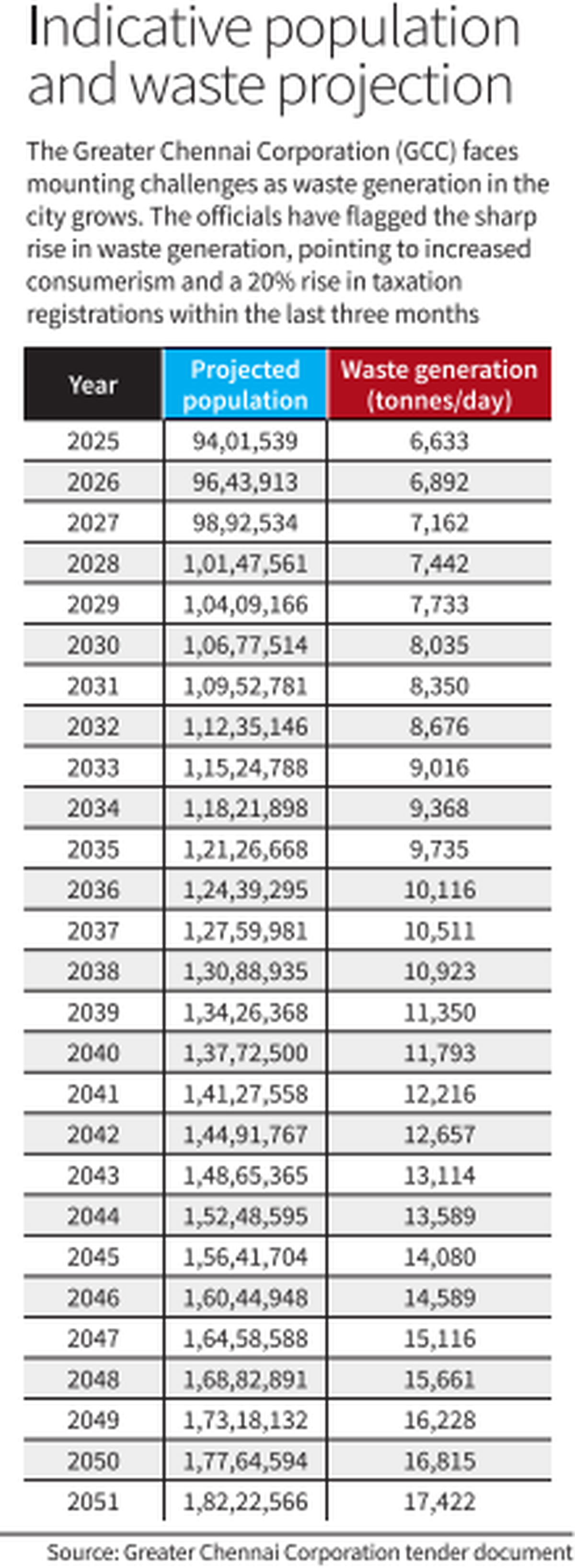
A city that has been grappling with problems in solid waste management will face mounting challenges as waste generation may triple in the next two decades. The Greater Chennai Corporation (GCC) estimates that the daily waste generated would increase to 17,422 tonnes by 2051. Currently, the civic body removes 5,900 tonnes daily.
Corporation officials have flagged the sharp rise in waste generation, pointing to increased consumerism and a 20% rise in taxation registration in the last three months. “Consumer habits have changed drastically, and this has resulted in more garbage,” says an official.
Expansion proposed
In the Chennai City Partnership: Environmental and Social Systems Assessment Report (March 2021), the Solid Waste Management Department proposed expansion of recovery facilities, micro-composting centres, and waste-to-energy systems such as incineration and bio-CNG production.
While waste-to-energy projects, like the one in the Kodungaiyur dump, promise sustainable waste management, their high cost is a matter of concern. The project anticipates handling a significant volume of waste, with an estimated 3,300 tonnes a day in the first year increasing to 3,960 tonnes a day by the 25th year (2048).
The expected feed characteristics of the waste-to-energy plant at Kodungaiyur include a significant proportion of plastics (15.81%), paper (4.75%), and other organic materials. But the Chennai Climate Action Plan (CCAP) argues against dependence on waste-to-energy projects. It underscores the need to reduce dependence on landfills and use non-recyclable waste for energy production, and remediation of the dumps to ensure no waste is left in the open.
The CCAP stresses that waste segregation at source would ensure high-quality feedstock for waste-to-energy plants, facilitate efficient energy generation, and minimise the impact on the environment. To achieve this, it prioritises 100% waste segregation at source to support decentralised processing facilities like composting units, recovery facilities, and bio-CNG plants. It calls for awareness campaigns, strict enforcement of segregation laws, and regular monitoring to reduce landfill use.
To tackle the issue, the civic body has been carrying out mass waste-cleaning drives, and has introduced bio-mining at the Perungudi and Kodungaiyur dumps. Between October 14 and 18 last year, it collected 25,376 tonnes of waste across all its 15 zones, including 443 tonnes of garden waste. And, on December 30, with the help of 3,300 workers, it cleared 38 tonnes of waste from 1,363 bus shelters. The waste included household garbage, construction debris, posters, and banners. On January 3 this year, the civic body removed 159.16 tonnes of waste from 203 burial grounds.
A January 11, 2025 drive got rid of 305 tonnes of waste from 71 flyovers and subways. The drive targeted garbage, debris, and unauthorised posters. Minor damage to infrastructure and faulty street lights were identified for repairs. The GCC collected nearly ₹7 lakh in fine for violating the rules to prevent open dumping until October 2024.
Rain exposed vulnerabilities
The heavy rain in 2024 exposed the vulnerabilities in Chennai’s waste management system. Waste clogging the storm water drains led to flooding in parts of the city. During the Ward 12 Sabha meeting in September, residents suggested that regular clean-ups were ineffective without sustained enforcement. Hence, a GPS system was installed in all GCC vehicles. The Integrated Command and Control Centre (ICCC) monitored garbage collection and water-pumping operations real time during the monsoon.
The GCC plans to make all 500 digital gadgets operational soon. This measure is expected to improve the imposition of fine on individuals dumping in the open.
Machinery to be deployed
According to an engineer in the Solid Waste Management Department, machinery to process about 1,000 tonnes of waste a day will be deployed. This will bring down the pressure on bio-mining by over 40% at both the dumps.
The GCC has urged the citizens to report illegal dumping on its 24-hour helpline (1913). On several occasions, Commissioner Kumaragurubaran called for public participation. Posting on the GCC’s official handle on X (formerly Twitter), residents highlighted the waste affecting public spaces and demanded stricter monitoring of garbage accumulation.
Published – January 12, 2025 10:42 pm IST


